Making Art, Part 3 — June 2026
I went to artist retreats, residencies. It was true love, being surrounded by other artists often in different disciplines, writers, dancers, musicians. Heaven, heaven, heaven! Vermont, then California, then France, and again France, then Costa Rica. Finally, a whole year in Paris.
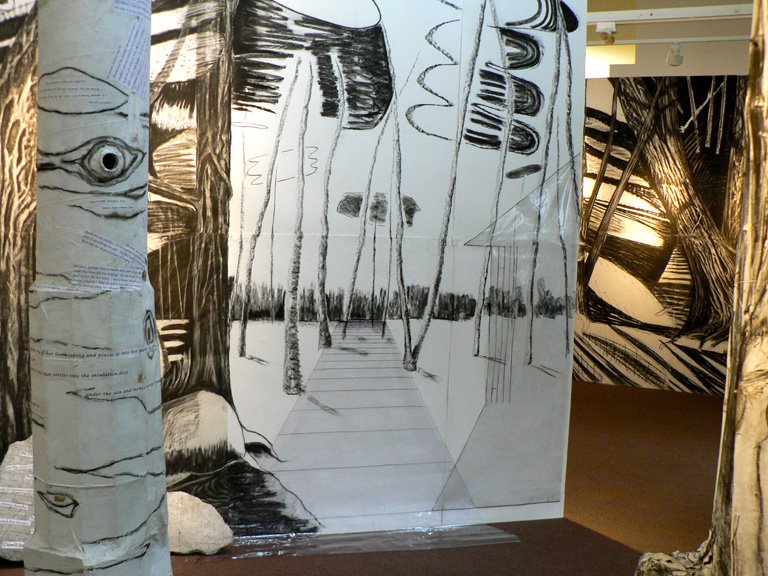
It was in the first French residency that I began the quest to discover my family history… the War, the South of France, the Pyrénées, the archives. And, upon return back home, my first installation with a story. Trees, walls of woods, the reforestation of a labor camp, Gurs, in the South of France where my mother was imprisoned during the War, or maybe wasn’t. I built barracks and walkways and cement pillars speaking of ‘undesirables.’ I gave a talk describing my story and owned my heritage.
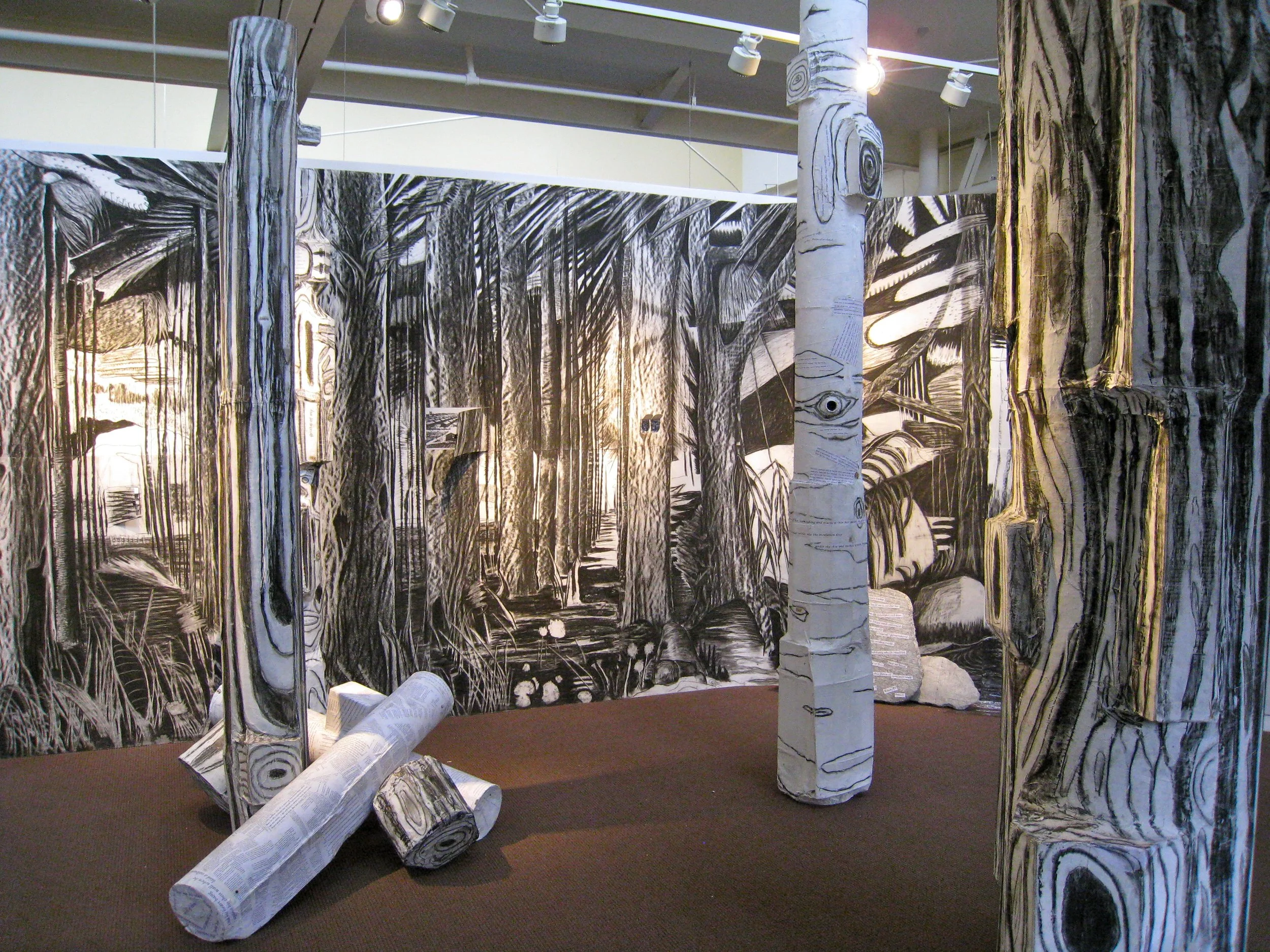
Was it there, in that particular installation in Boston, that I knew I indeed was an artist? A real one? Maybe. I felt like it was a giving birth — to the scene, to the story. During the semester it was up, there were talks and dance performances, and readings. I said, “I could stop right here. This will be enough. I cannot imagine any other installation being as significant. I’m done.”
And I was done. With that series. From Japan to Brandeis University. Instead of making more installations, I focused on writing for years after that. I put away my art materials but kept the studio. I drove there and sat on the old orange stuffed chair and wrote stories and essays. It felt perfect. And then the studio building in the old mill closed down. And my art neighbors dispersed.
And I began missing the physicality of making art. The extension of my arm, the climbing on ladders, the black chalk and paint all over my clothes and body. I did not miss the carrying of heavy boxes onto and off monster truck rentals, the building and dismantling of the physical worlds I put up and took down. The pressure of creating an environment in two weeks and then pulling it apart a month or even six months later.
“I’m too old for all this,” I declared at sixty-six. I didn’t end up getting another studio. I packed all my charcoal drawings and tubular trees, and all the huge abstract oils I had painted over the years as a contrast to the installations, and I deposited the whole mess in a massive old textile mill storage space shared with another ten artists, each stacking work in their own allotted square footage. And I turned away. I would deal with the piles of stuff later. It took nine years.
I took stock of my life. I knew it was time to stop my day job. I was heading to seventy, and if not now, when?
People say, “Ask, and the universe delivers.” People say, “The squeaky wheel gets the grease.” People say, “Build it, and they will come.” But the truth was that it seemed completely magical when a few months before my planned date for closing my therapy practice, a letter arrived inviting me to attend an artist residency in Paris. I had applied, as I constantly applied for residencies, grants, publication, and then forgot about it. One time, years earlier, I had totally missed a snail-mail letter informing me that I was a finalist for a State Arts Grant and almost missed the deadline for claiming the prize until I bumped into a colleague who congratulated me. Jeez.
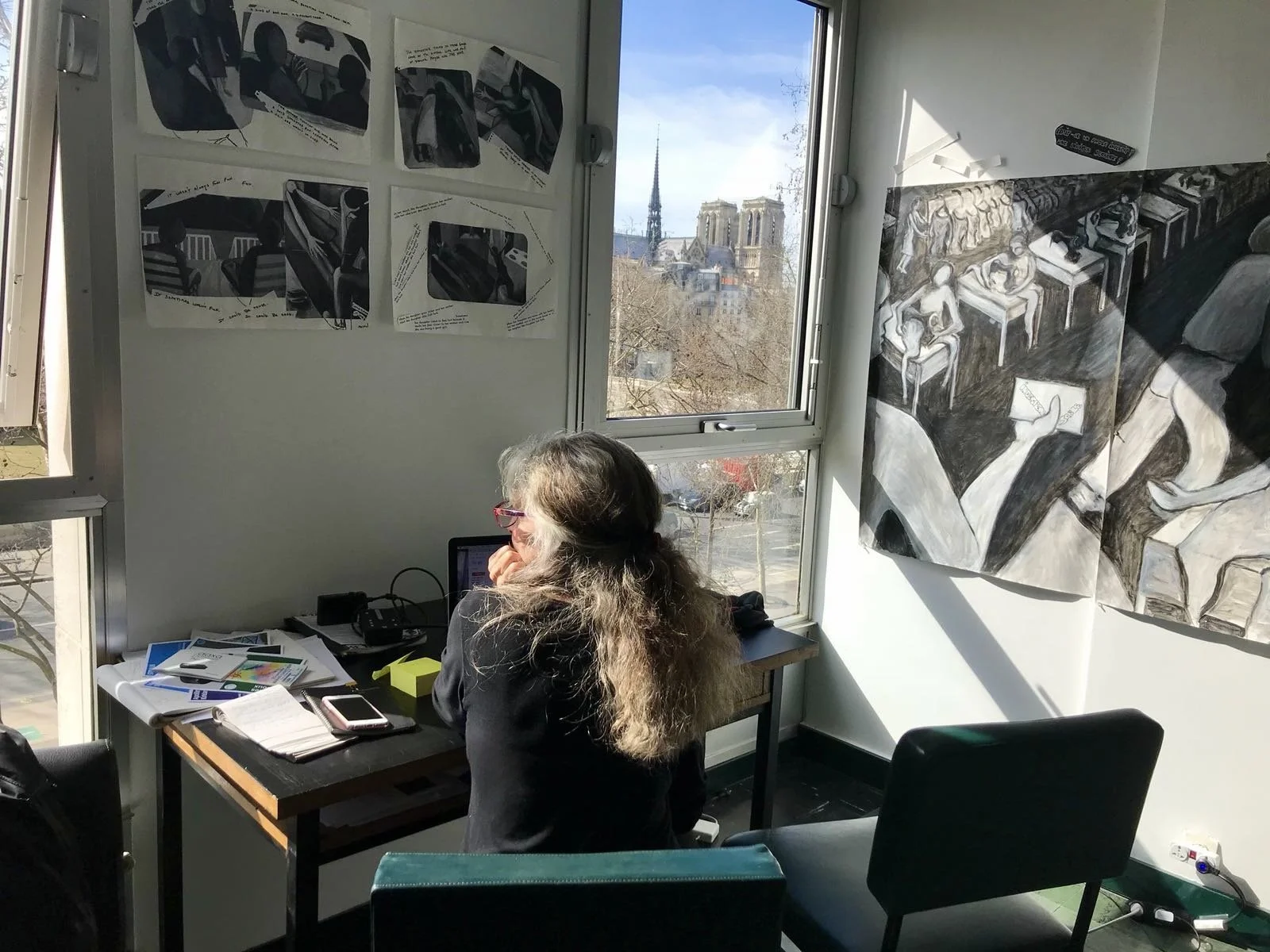
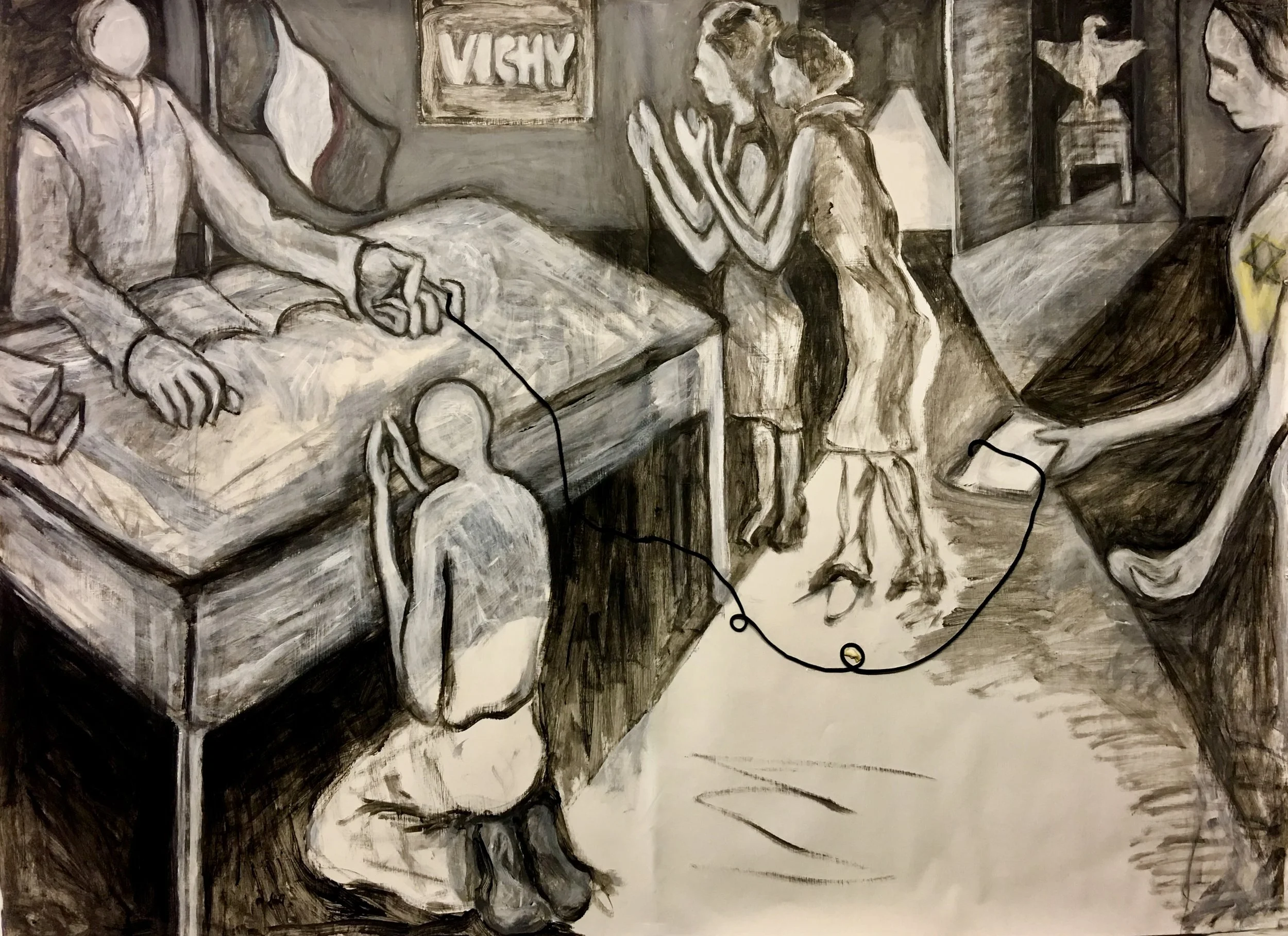
This new opportunity arrived in the mailbox, and it offered six months in a live/work studio on the Seine in the Marais with a view of Notre Dame (before the fire.) Six months became a year of art bliss. Surrounded by three hundred international artists of every discipline, I began a graphic novel based on my family history. I wanted to move from the blood and guts of war and my mothers’ wild mental illness to the joy of transcendence as the third generation was transformed by the passion of telling stories of serious adversity. And the healing gifts of creating beauty through art.
While I had loved being of use as a psychotherapist for my day job and an artist on the side, my two kids mainlined directly to the art, making pithy films about others overcoming their own suffering. My friends asked, “Are you aware that they are telling your story?” I didn’t know if that was the motivation, or the fact that they were second generation Holocaust survivors, or simply random choice, but I was impressed that they were moved to explore the impact of monumental challenge on people.
At the residency in Paris, I painted and exhibited and soaked up others’ art, music, and dance. I connected with artists from Finland, Germany, France, Iraq, Israel, England, and Iran. I researched my family story in the archives in Paris and Dordogne and found a picture of my absentee dad being expelled from France for Communist activities. Shockingly, he looked identical to my younger son.
One day, walking across the Pont Marie from Ile St Louis, I had an intense body wash of ecstasy. I felt like I was my mother rushing to meet my friends at a café and then returning home to Paul, her lover, my real-life father. It was eons ago, when my mother was young and vibrant and happy.
And me? I had never been so happy. It was beyond any other thrill I had experienced in my long seventy years of life. Who knew this was possible — to find one’s happiest moment in the last stage of life? ‘Don’t worry,’ I wanted to shout to the young. ‘Don’t worry that it’s too late! It, life, develops like a perennial flower, stronger, more beautiful as the seasons accumulate.’
And here I am now, re-situated in Los Angeles where the art world throbs with action. I paint in the little extra room facing the sea. I write with my friends at a café. Covid has come and gone. I remember it like it was last week, my anxiety about it being the end of life as I knew it, especially for the ‘old.’ I’d been racing forward trying to finish the series of paintings for the graphic novel. I painted ten in Paris and several more during the two years after that. But when Covid bared its fangs, I skidded to a halt.
“What matters now?” I asked. “If I may die in a month or several months, if I am ‘sheltering in place’ in my snug apartment overlooking the sea? How do I want to spend my last days?”
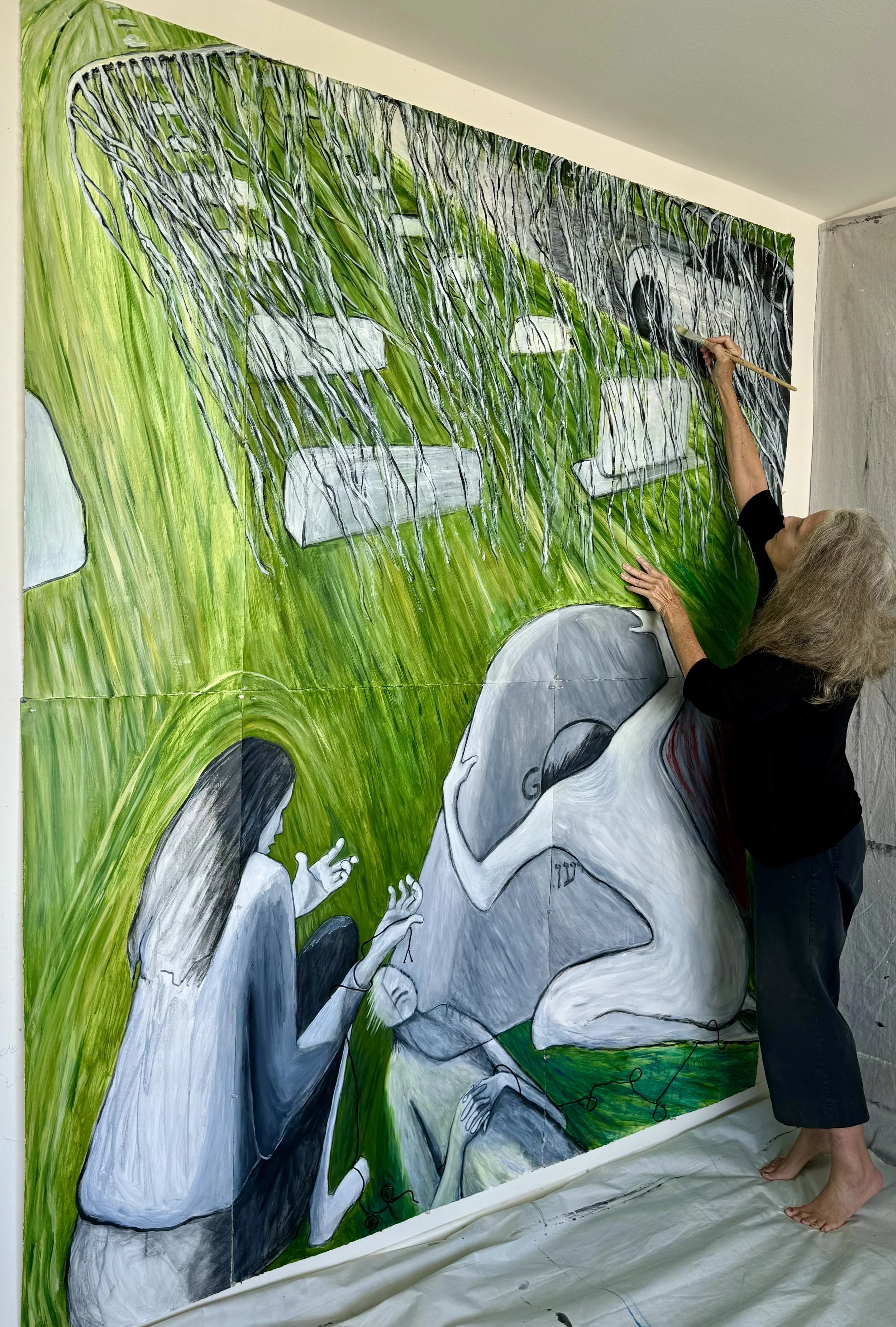
Was I going to rev up and hustle to find a book publisher for the new graphic novel? Would I send out letters to various graphic book promoters to find an agent or a home for the book?
I was clear the answer was No. Nothing about promoting a book with my name attached felt like the goal. I read a New York Times article about the Lieutenant Governor of Washington State, Cyrus Habib. He was a man who had gone blind at age eight and decided that he was not going to allow his disability to limit his possibilities. He studied, went to Yale, got a law degree, and eventually entered politics. It was right after Jay Inslee, the Governor of Washington, had campaigned for a short while to run for U.S. president in 2020. The Lieutenant Governor was on deck to become Governor if Insley was tapped for a job in the Biden administration. The 2020 election had just ended when Covid raised its tentacles.
This Lieutenant Governor , Habib, had recently written a memoir about overcoming obstacles. He, as opposed to me, already had a publisher, and the book editor suggested that they begin work on the publicity for the forthcoming launch.
The guy decided it was absurd to spend his energy self-promoting when people were dying by the thousands from the pandemic. He took stock. I was taking stock. The guy canceled the book publication, dropped out of his job in politics, and decided to become a Jesuit priest, a ten-year process, moving from monk to church position.
I almost jumped up and cheered when I read the story. Yes, I thought. ‘Yes,’ I said to everyone who would listen to me. ‘Yes, this is me. I will do the same.’
No, I did not want to become a Jesuit. But I did want something that felt as profound. (To be continued…)